What Makes Aluminum Toolboxes on Commercial Trucks Fail Prematurely?
Here’s a breakdown of the specific failure points fleets run into — and what separates a box that lasts from one that doesn’t.

Aluminum toolboxes on commercial trucks fail prematurely for a handful of predictable reasons: weak weld joints that crack under constant vibration, door seals that let in road spray and salt, latch and hinge hardware that wears out faster than the box itself, and thin-gauge aluminum that isn’t built to carry real jobsite loads. Add in the punishment of daily highway vibration, temperature swings, and exposure to de-icing chemicals, and it’s easy to see why a poorly built box can start rattling, leaking, or seizing up well before the truck it’s mounted to is ready for replacement.
Here’s a breakdown of the specific failure points fleets run into — and what separates a box that lasts from one that doesn’t.
1. Butt-Welded Corners That Crack Over Time
Corner welds take the brunt of the stress every time a toolbox flexes on a rough road. Many toolboxes are built with simple butt welds, where two edges are joined flush with no material overlap. Under constant vibration, that thin weld line is a natural crack point — and once a corner seam fails, moisture and road grime start working their way in. Boxes built with lap-joint welds, where the material overlaps at the corner, spread that stress across more surface area for a stronger, longer-lasting seam.
2. Door Seals That Let Water and Salt In
A toolbox is only as weatherproof as its door seal. Cheaper seals that don’t run the full perimeter of the door — or that degrade quickly under UV and temperature cycling — let in rain, road spray, and winter road salt. Once moisture gets inside, it accelerates corrosion on tools, hinges, and the box interior itself, even if the aluminum shell is holding up fine. Automotive-grade door seals that secure the entire perimeter of the door are built specifically to keep that moisture out for the life of the box.
3. Latch and Hinge Hardware That Wears Out Fast
The latch and hinge get used every single day, often with gloved hands in bad weather — and they’re frequently the first thing to fail, long before the aluminum body shows any wear. Standard steel striker plates wear down with repeated use, leading to latches that stick, loosen, or stop sealing tightly. Using a UHMW plastic striker plate instead of standard steel extends the life of the latch assembly and keeps the door operating smoothly for years. Piano-style door hinges also hold up better over time than shorter hinge segments, since they distribute the door’s weight and stress across the full length of the opening instead of concentrating it at a few pivot points.
4. Thin-Gauge Aluminum That Can’t Handle the Load
Not all aluminum is created equal. Toolboxes built from thin or low-strength aluminum can dent, oil-can (flex and pop under pressure), or deform when they’re loaded up with heavy tools and gear — exactly the job they’re meant to do. High-strength, low-weight aluminum construction holds its shape under real working loads without adding unnecessary weight to the truck, striking the balance fleets actually need between durability and payload.
5. Corrosion From Road Salt and Weather Exposure
Even aluminum, which resists rust far better than steel, isn’t immune to corrosion — especially around welds, fasteners, and any spots where the protective finish has worn away. Trucks running winter routes through salted highways face accelerated wear on any storage box that isn’t properly finished and sealed. A protective coating on smooth doors (removed at install) and a polished, sealed finish help toolboxes hold up against years of road salt and weather exposure.
6. Improper Mounting and Vibration Fatigue
Even a well-built box can fail early if it’s mounted incorrectly or without the right hardware for the truck’s frame and body style. Constant highway vibration puts stress on every mounting point, and a loose or mismatched mounting kit accelerates wear on both the box and the fasteners holding it in place. Choosing a toolbox with the correct mounting kit for the specific truck — and having it installed properly — goes a long way toward preventing that kind of fatigue failure.
Built to Avoid These Failure Points
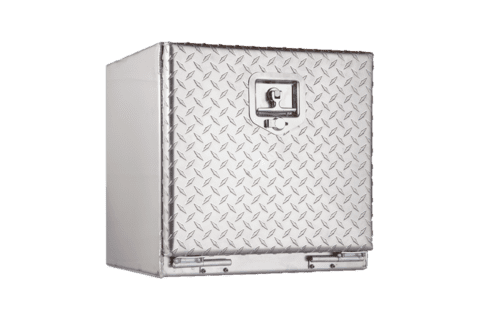
Merritt’s aluminum toolboxes for semi-trucks are engineered around these exact failure points:
- Lap-joint welded corners for superior strength and longer life compared to standard butt-welded boxes
- Automotive-grade door seals that secure the full perimeter for a more water-resistant fit
- UHMW plastic striker plates for longer latch assembly life and smoother operation
- Piano-style door hinges and an extruded door frame for added structural strength
- High-strength, low-weight aluminum construction with a protective coating on smooth doors
- Polished stainless-steel T-handle latches built to hold up to daily use
With 40 standard base models across the Aluminum Toolbox, Cam Lock Box, and S-Series lines — plus custom sizing available — fleets can match the right toolbox to the truck instead of forcing a generic box onto a configuration it wasn’t built for.
Need a toolbox built to go the distance? Contact Merritt’s sales team or find a dealer near you to spec out the right fit for your fleet.