What Leads to Frequent Damage or Replacement of Heavy-Duty Truck Fenders?
If you’re replacing fenders more often than you’d like, you’re not alone. Heavy-duty truck fenders take a beating every single day, and understanding why they fail is the first step …
If you’re replacing fenders more often than you’d like, you’re not alone. Heavy-duty truck fenders take a beating every single day, and understanding why they fail is the first step to choosing a fender — and a material — that actually holds up.
The Most Common Causes of Fender Damage
Collisions and backing accidents. Clipping a loading dock, brushing a post, or backing into an obstacle can dent, crack, or tear a fender in an instant. Even low-speed impacts are one of the leading causes of replacement.
Road debris. Rocks, gravel, tire fragments, and debris kicked up by your truck or the vehicle ahead chip paint, dent metal, and crack composite or plastic fenders over time.
Tire-related damage. A blowout can shred or tear off a fender outright, especially rear drive fenders mounted close to the tires. Improper tire clearance or suspension issues can also cause tires to rub against the fender, wearing it down from the inside.
Corrosion. Trucks running salted winter roads see steel fenders rust from the inside out. Trapped mud, moisture, and debris speed this up, often turning what would be a simple repair into a full replacement.
Vibration and fatigue. Long-haul miles and rough roads loosen mounting hardware, crack brackets, and stress the fender itself — especially when the mounting system isn’t inspected regularly.
Harsh work environments. Construction, mining, logging, agriculture, and waste-hauling routes mean constant exposure to mud, branches, rocks, and uneven terrain — all of which raise the odds of impact and abrasion damage.
Weather and UV exposure. Years of sun and temperature swings make plastic and composite fenders brittle, so they crack from impacts that wouldn’t have hurt them when new.
Improper installation or worn fasteners. Loose, broken, or missing brackets and bolts let a fender vibrate excessively, which eventually leads to cracking or complete detachment.
When Replacement Beats Repair
Replacement is usually the smarter call when:
- The fender is cracked or torn
- Corrosion has weakened the material
- Damage affects wheel clearance or alignment
- Repair costs approach — or exceed — the price of a new fender
Building In Durability From the Start
Routine inspections, tightening mounting hardware, and washing off road salt and mud all help extend a fender’s life. But the biggest factor in how often you’ll be replacing fenders is the fender itself — its material, thickness, and construction.
That’s where Merritt Aluminum Products comes in. Merritt has built heavy-duty fenders for Class 7 and 8 trucks for over 65 years, with options engineered specifically to outlast the conditions above:
- Aluminum & Stainless Rolled Fenders — the classic rolled profile, available in the widest range of lengths, finishes, and price points, so fleets and owner-operators can match proven styling to their exact application.
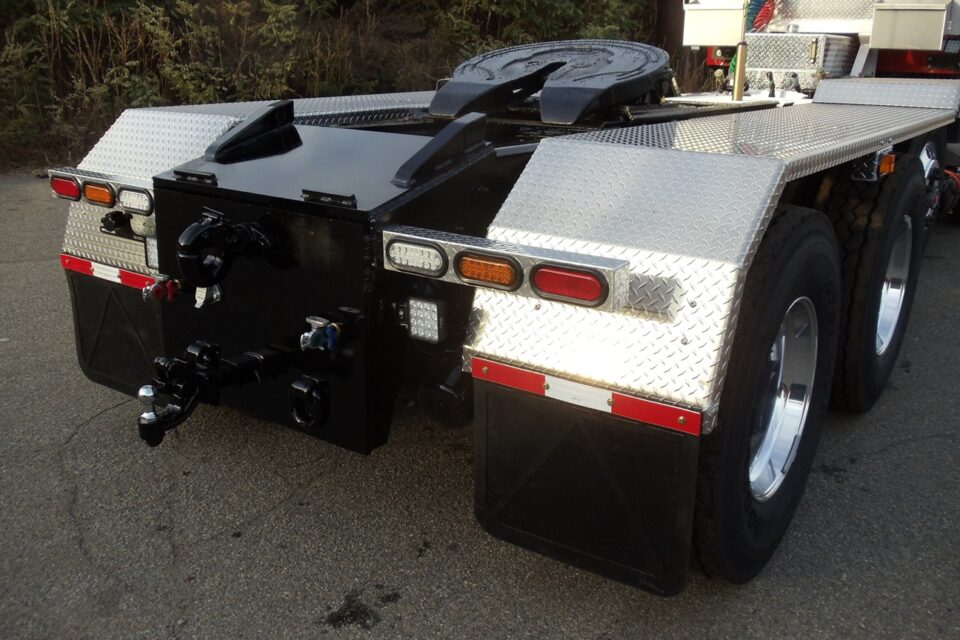
- Aluminum Super Duty Fender — Merritt’s heaviest-duty aluminum fender, built from 1/8″ diamond plate aluminum alloy with a double break and reinforcing gussets for added strength. Made for heavy-haul, mining, and logging routes that chew through standard fenders — and the diamond plate finish resists corrosion while staying slip-resistant if you need to stand on it.
- Deep Drop & Wrap Fenders — an extra-deep skirt that follows the tire’s contour for maximum splash control, available in aluminum (.090, .100 diamond plate, or .125 thickness) or 16-gauge 304 stainless steel for serious strength and a bright, corrosion-resistant finish.
- Poly-Pro Fenders — high-density polyethylene fenders that flex on impact instead of cracking, resist corrosion and road salt, and carry UV protection to prevent fading or crumbling. Because the full fender bolts together in two halves, a damaged section is quick and inexpensive to replace instead of requiring a whole new unit.
Whether the issue is collisions, corrosion, vibration, or UV breakdown, Merritt’s range means there’s a fender built to handle the specific abuse your routes dish out — backed by warehouses across the U.S. that can ship replacement fenders within three days when you need them fast.